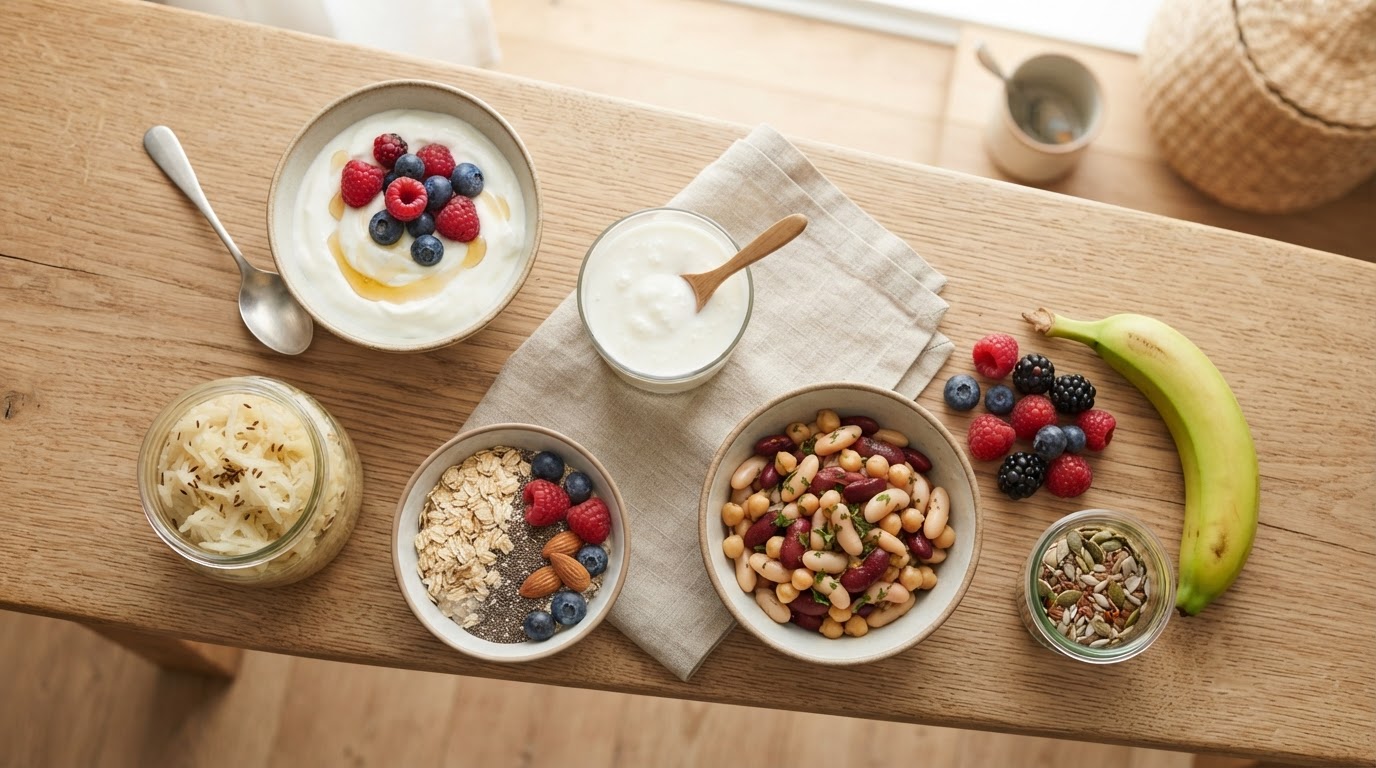
Gut health has become one of the most talked about topics in nutrition, and for good reason. Research suggests the trillions of bacteria living in our gut, known as the gut microbiome, play a part in digestion, immunity, mood and even how we manage our weight.
As we move through our forties and beyond, changes in hormones, stress, sleep and medications can all affect how our gut feels. Here are seven simple, food-first habits that may help support a happier gut.
Why gut health matters more after 40
Many women notice changes in digestion in midlife. Bloating, irregularity or feeling "heavy" after meals can creep in. Some research suggests the gut microbiome may shift around menopause too.
The encouraging part is that your gut bacteria respond to what you eat, often quite quickly. Small, consistent changes can make a real difference to how you feel. If you'd like to understand the link between gut bacteria and weight, Skinny Gut Bacteria is a good place to start.
Habit 1: Aim for enough fibre every day
Fibre is food for your good gut bacteria. When they break it down, they produce compounds that research suggests help keep the lining of your gut healthy.
Most Australian adults don't get enough. Women are generally advised to aim for around 25g a day, with higher targets suggested for long-term health. How Much Fibre Do I Need Per Day? breaks down the numbers, and my free fibre counter makes it easy to see where you're at.
Increase fibre gradually and drink plenty of water as you go, to give your gut time to adjust.
Habit 2: Eat a wide variety of plants
Different gut bacteria enjoy different foods. Studies have found that people who eat a greater variety of plant foods each week tend to have a more diverse microbiome.
Vegetables, fruit, legumes, wholegrains, nuts, seeds, herbs and spices all count. A handful of mixed seeds on your breakfast or a tin of mixed beans in a salad can add several plants in one go.
Habit 3: Include fermented foods
Fermented foods such as natural yoghurt, kefir, sauerkraut, kimchi and miso contain live bacteria. Some studies suggest that eating them regularly may support microbiome diversity.
Start small, such as a spoonful of sauerkraut with dinner or a small serve of kefir, and see how you feel.
Habit 4: Don't forget resistant starch
Resistant starch is a type of carbohydrate that behaves a bit like fibre. You'll find it in green-tipped bananas, legumes, oats, and potatoes or rice that have been cooked and then cooled.
Leftover rice in a salad, or cooled potatoes in a potato salad, are easy ways to include it. My High-Fibre Lentil and Vegetable Soup is another simple option.
Habit 5: Eat slowly and regularly
Digestion starts in your mouth. Eating slowly, chewing well and not rushing meals can help reduce that uncomfortable full or bloated feeling. Regular mealtimes may also help your digestion settle into a rhythm.
Habit 6: Look after stress and sleep
The gut and brain are closely connected. Stress and poor sleep can both affect digestion, and many women notice their tummy is the first place stress shows up.
Gentle movement, time outdoors, a regular bedtime and a few slow breaths before meals can all help. A daily walk after dinner is a lovely habit for both digestion and stress.
Habit 7: Keep moving
Regular physical activity has been linked with a more diverse gut microbiome in some studies, and movement can help keep things regular. You don't need intense workouts. Walking, swimming, gardening and strength training all count.
When to see your GP
If you have ongoing bloating, pain, changes in bowel habits, blood in your stool, unexplained weight loss or other symptoms, please see your GP. These need proper medical assessment, and the habits above are not a substitute for that.
Want support with your gut and your weight?
Gut health, fibre and weight are closely linked, and small changes often help with all three. If you'd like a personalised plan, start with my free weight loss quiz or book a free 15-minute discovery call. I coach women 40+ all over Australia by phone or Zoom.
FAQ
What are the signs of an unhappy gut?
Common signs people notice include bloating, irregularity, discomfort after meals and changes in energy. These can have many causes, so if they're ongoing, see your GP for proper assessment.
How quickly can gut health improve?
Research suggests the gut microbiome can begin to shift within days of changing what you eat. Lasting change comes from keeping the new habits up over weeks and months.
Do I need a probiotic supplement?
Not necessarily. Many people support their gut well with fibre, a variety of plants and fermented foods. If you're considering a probiotic, ask your GP or pharmacist which, if any, suits you.
Ready for a plan that fits you?
Book a free 15-minute discovery call by phone or Zoom. No pressure, no obligation.