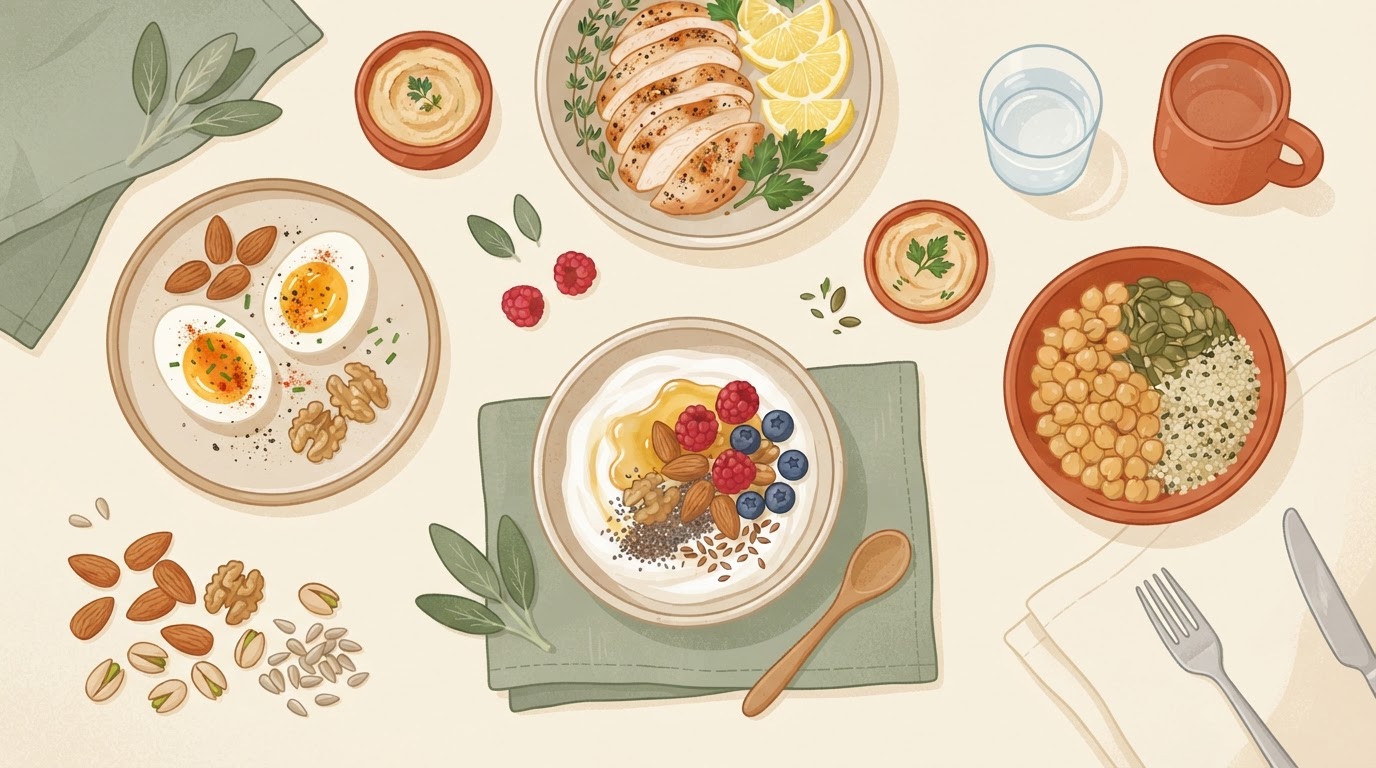
If I could change only one thing in most women's eating after 40, it would be protein. Not because it's trendy, but because it does three jobs at once. It protects your muscle, keeps you full and helps steady your energy. Yet most women I work with eat far less than they need, especially at breakfast.
Why protein matters more after 40
From our 40s, we slowly lose muscle unless we actively work to keep it. Less muscle means a slower metabolism and a body that stores fat more easily, especially around the middle. Protein gives your body the building blocks to hold on to that muscle, particularly when you pair it with strength exercise.
Protein is also the most filling of all the nutrients. A protein-rich meal keeps hunger away for longer, which makes it easier to eat a little less without feeling deprived.
How much do you need?
Needs vary with your size, activity and health, so treat this as a general guide. A simple target many women find helpful is:
- 20 to 30 grams of protein at each main meal
- A protein-rich snack if there's a long gap between meals
What does 25 grams look like? Roughly:
- A palm-sized piece of chicken, fish or lean meat
- Three eggs plus a slice of cheese
- A 200g tub of Greek yoghurt with a sprinkle of nuts
- A cup of cooked lentils plus a handful of edamame
If you have kidney problems or another medical condition, check with your GP before increasing protein.
The breakfast gap
Most women eat well at dinner but have toast, cereal or just coffee in the morning. That's often only 5 to 10 grams of protein. Fixing breakfast alone can change your whole day, with fewer cravings mid-morning and more energy in the afternoon.
Easy breakfast swaps:
- Eggs on wholegrain toast with spinach
- Greek yoghurt with berries, oats and seeds
- A smoothie with milk, yoghurt and a scoop of protein powder
- Leftover chicken and vegetables (yes, dinner for breakfast works)
Don't forget fibre and plants
Protein works best on a plate that's also full of vegetables and fibre. Together they keep your blood sugar steady and your gut healthy. My free Fiber Counter app can help you check your daily fibre at the same time.
Protein is one piece of the puzzle
Eating more protein won't fix everything on its own. It works best alongside strength training, good sleep and a plan that suits your life. If you're noticing your shape changing, my post on menopause belly fat explains why and what else helps.
Want to know where your biggest opportunity is? Take the free Weight Loss Quiz and get a personalised starting point in a few minutes.
Ready for a plan that fits you?
Book a free 15-minute discovery call by phone or Zoom. No pressure, no obligation.