Most Australians don't eat enough fibre, and most of us have no idea how much we're actually getting. Tracking it for a little while can be a real eye-opener. But you don't need to weigh every lentil or log every mouthful to get the benefits.
Here's a simple, realistic way to keep an eye on your fibre, whether you prefer an app, a notebook or just a few mental shortcuts.
Why fibre is worth tracking
Fibre does a lot of quiet work in your body. It helps you feel full for longer, supports regular bowel habits and feeds the beneficial bacteria in your gut. I've written about that last point in Skinny Gut Bacteria.
For women over 40 who are trying to manage their weight, fibre is especially helpful because it adds volume to meals without adding a lot of kilojoules. If you often feel hungry soon after eating, low fibre could be part of the reason. You can read more in Always Hungry After 40?
How much fibre you're aiming for
Australian guidelines suggest an adequate intake of around 25g of fibre a day for adult women, with a higher target of about 28g a day suggested to help support long-term health. Many people eat well below that.
For the full breakdown, including how to increase your intake gently, see Are You Eating Enough Fibre? How Much You Need Per Day.
Option 1: Use a fibre tracker app
If you like numbers, a fibre tracker is the easiest way to get a clear picture. Rather than logging everything you eat, you only log the foods that contain fibre, which keeps it quick.
I created a free Fiber Counter app for exactly this reason. You can use it on the web or download it from the App Store, add your fibre foods through the day and see how close you are to your target.
A few tips for using any tracker:
- Track for one or two weeks, not forever. The aim is to learn your patterns.
- Notice your "fibre gaps". Many women find breakfast or lunch is where fibre is lowest.
- Look at the whole week. One low day isn't a problem. A pattern is worth adjusting.
Option 2: The handful method
If apps aren't your thing, try counting fibre-rich serves instead of grams. As a rough guide, aim for:
- Five or more serves of vegetables (a serve is about half a cup cooked, or one cup of salad leaves)
- Two serves of fruit, ideally with the skin on where you can
- Wholegrains at most meals, such as oats, wholegrain bread, brown rice or quinoa
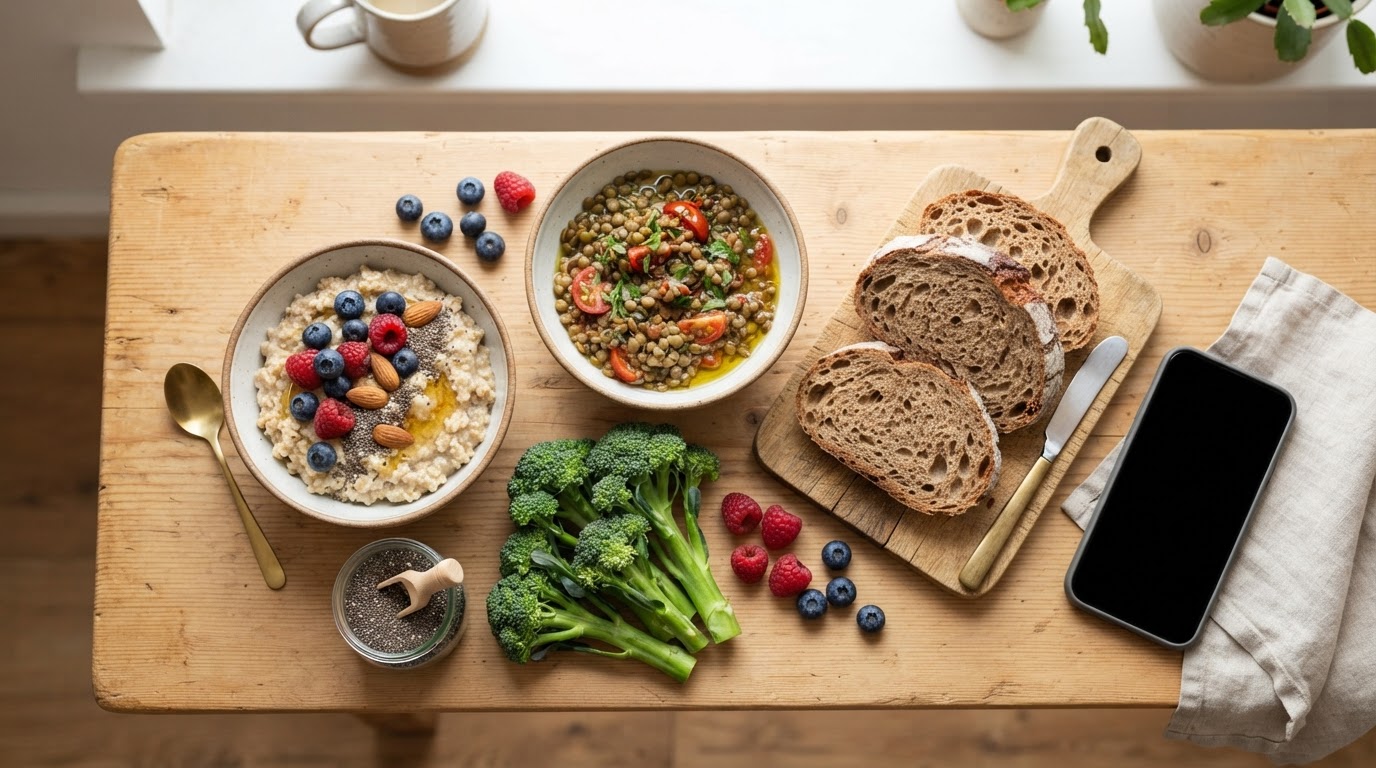
- A handful of legumes most days, such as lentils, chickpeas or beans
- A small handful of nuts or seeds, such as almonds, chia or flaxseed
If you're ticking most of these off each day, you're likely to be in a good range. A simple tally on the fridge or in your phone notes can work really well.
Option 3: Build fibre into the plate
The lowest-effort approach is to make fibre automatic. Try these swaps:
- White bread to wholegrain or seeded bread
- Regular pasta to legume or wholemeal pasta
- A plain salad to one with chickpeas or a sprinkle of seeds
- Juice to whole fruit
- Biscuits to a piece of fruit with a few nuts
Easy vegetable sides help too. My Roasted Broccoli with Lemon and Garlic is a simple way to add more greens to dinner.
Go slowly and drink water
If you're increasing fibre, take it gradually over a couple of weeks and drink plenty of water. Adding a lot of fibre very quickly can cause bloating, wind or discomfort.
If you have ongoing bloating, pain, changes in your bowel habits or any other digestive symptoms, please see your GP. These are worth checking properly, and some people need tailored advice about which fibres suit them.
Ready for more personalised support?
Tracking fibre is a great first step, and it often shows you where small changes can make a big difference. If you'd like help putting it all together, take my free weight loss quiz for a personalised snapshot of your habits. Or book a free 15-minute discovery call to chat about coaching. I work with women 40+ all over Australia by phone or Zoom.
FAQ
What's the easiest way to track fibre?
A fibre tracker app where you only log fibre-containing foods is usually the quickest. If you prefer not to use an app, counting serves of vegetables, fruit, wholegrains, legumes and nuts works well too.
How long should I track my fibre for?
One to two weeks is usually enough to spot your patterns and see where you can add more. After that, many people only need an occasional check-in.
Can I eat too much fibre?
Increasing fibre too quickly can cause bloating and discomfort, so go gradually and drink plenty of water. If you have digestive symptoms or a medical condition, speak with your GP for advice that suits you.
Ready for a plan that fits you?
Book a free 15-minute discovery call by phone or Zoom. No pressure, no obligation.