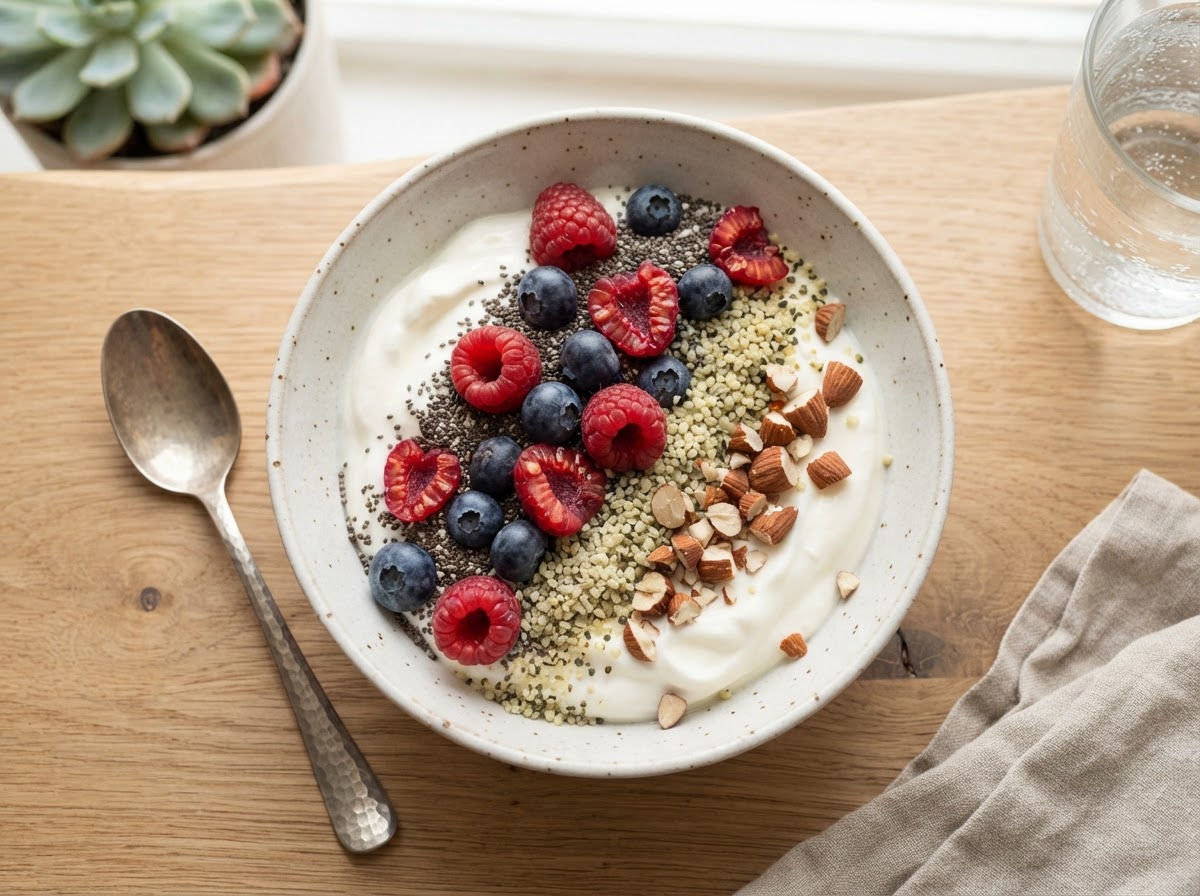
If your breakfast is toast and a coffee, there's a good chance you're hungry again by 10am. After 40, a breakfast built around protein and fibre can make a real difference to how full and steady you feel through the morning. This Greek yoghurt bowl takes about three minutes to put together, needs no cooking, and lands at around 30g of protein depending on the yoghurt you choose.
Why protein at breakfast matters after 40
As we move through our 40s and beyond, we naturally start to lose muscle, and protein becomes more important for holding on to it. Many women eat most of their protein at dinner and very little in the morning. Spreading it more evenly across the day, with roughly 25 to 30g at each meal, is a simple way to support muscle, keep hunger in check and make weight management feel less like a battle.
If you'd like to understand how much you actually need, I've written a full guide on how much protein women over 40 need to lose weight.
What you'll need (serves 1)
- 250g plain high-protein Greek yoghurt (check the label for about 10g protein per 100g)
- 1 tablespoon hulled hemp seeds
- 1 tablespoon chia seeds
- 10 almonds, roughly chopped (about 10g)
- 1 cup mixed berries, fresh or frozen
- A pinch of cinnamon
- Optional: 1 teaspoon honey or a few drops of vanilla extract
Approximate nutrition: around 30g protein and 8 to 10g fibre per bowl. Numbers vary by brand, so use them as a guide rather than a rule.
How to make it
- Spoon the yoghurt into a bowl or a jar if you're taking it to work.
- Stir through the chia seeds and cinnamon. If you have five minutes, let it sit so the chia softens slightly.
- Top with berries, hemp seeds and chopped almonds.
- Add a small drizzle of honey or vanilla if you like it a little sweeter.
Frozen berries work beautifully here. Pop them on the night before and they'll thaw into a lovely syrupy layer by morning.
Choosing the right yoghurt
This is where most of the protein comes from, so it's worth a quick look at the label. Plain Greek-style yoghurts in Australian supermarkets range quite a bit, from around 5g to more than 10g of protein per 100g. Look for:
- Protein: aim for 8g or more per 100g
- Sugar: plain yoghurt has natural milk sugars (usually 3 to 6g per 100g); flavoured versions often have much more
- Ingredients: a short list, ideally just milk and live cultures
Full fat or reduced fat is your call. Full fat tends to be more filling and tastes richer, while reduced fat versions are often a little higher in protein. Either can fit well into a balanced day.
If dairy doesn't agree with you, or you notice bloating or discomfort after eating it, please see your GP before cutting out food groups. Lactose-free Greek yoghurt or a high-protein soy yoghurt can be good options to discuss.
Why the toppings earn their place
Every topping in this bowl is doing a job, not just looking pretty.
- Chia seeds add fibre and thicken the yoghurt so it feels more like a meal.
- Hemp seeds add a few extra grams of protein plus healthy fats, with a mild nutty flavour.
- Berries bring colour, antioxidants and more fibre for very few kilojoules.
- Almonds give crunch and healthy fats that help the bowl keep you full.
- Cinnamon adds sweetness without sugar.
Together, protein and fibre are a strong team for fullness. Most Australian women fall short on fibre, so a breakfast that delivers a good chunk of it is a great head start. You can read more in my post on how much fibre you need per day.
Easy swaps and variations
Once you've got the base, it's easy to keep things interesting through the week:
- Tropical: mango, passionfruit and a sprinkle of shredded coconut
- Apple pie: grated apple, cinnamon, walnuts and a few rolled oats
- Choc berry: a teaspoon of cacao powder stirred through, with raspberries
- Higher protein: add a scoop of unflavoured or vanilla protein powder mixed in with a splash of milk
- Make ahead: layer three jars on Sunday night (keep the nuts separate so they stay crunchy)
Is this right for you?
A high-protein breakfast is a great habit, but it's only one piece of the puzzle. Sleep, stress, hormones, movement and even your genes all play a role in how your body responds to food. If you've been eating "well" and still feel stuck, it can help to look at the bigger picture.
My free weight loss quiz takes a couple of minutes and gives you a personalised report on the habits that may be holding you back. And if you'd rather talk it through, you can book a free 15-minute discovery call with me by phone or Zoom from anywhere in Australia.
FAQ
Can I eat this Greek yoghurt bowl every day?
Yes, it can be a great everyday breakfast for many people. Rotating the fruit and toppings adds variety and a wider range of nutrients across the week.
Is Greek yoghurt good for weight loss?
Plain Greek yoghurt is high in protein, which helps you feel fuller for longer, so it can be a helpful part of a balanced eating plan. Choose plain over flavoured to keep added sugar down.
What can I use instead of Greek yoghurt if I'm dairy free?
A high-protein soy yoghurt is the closest swap for protein. Coconut yoghurt is creamy but much lower in protein, so you'd need to add protein powder or extra seeds to get close to 30g.
Ready for a plan that fits you?
Book a free 15-minute discovery call by phone or Zoom. No pressure, no obligation.